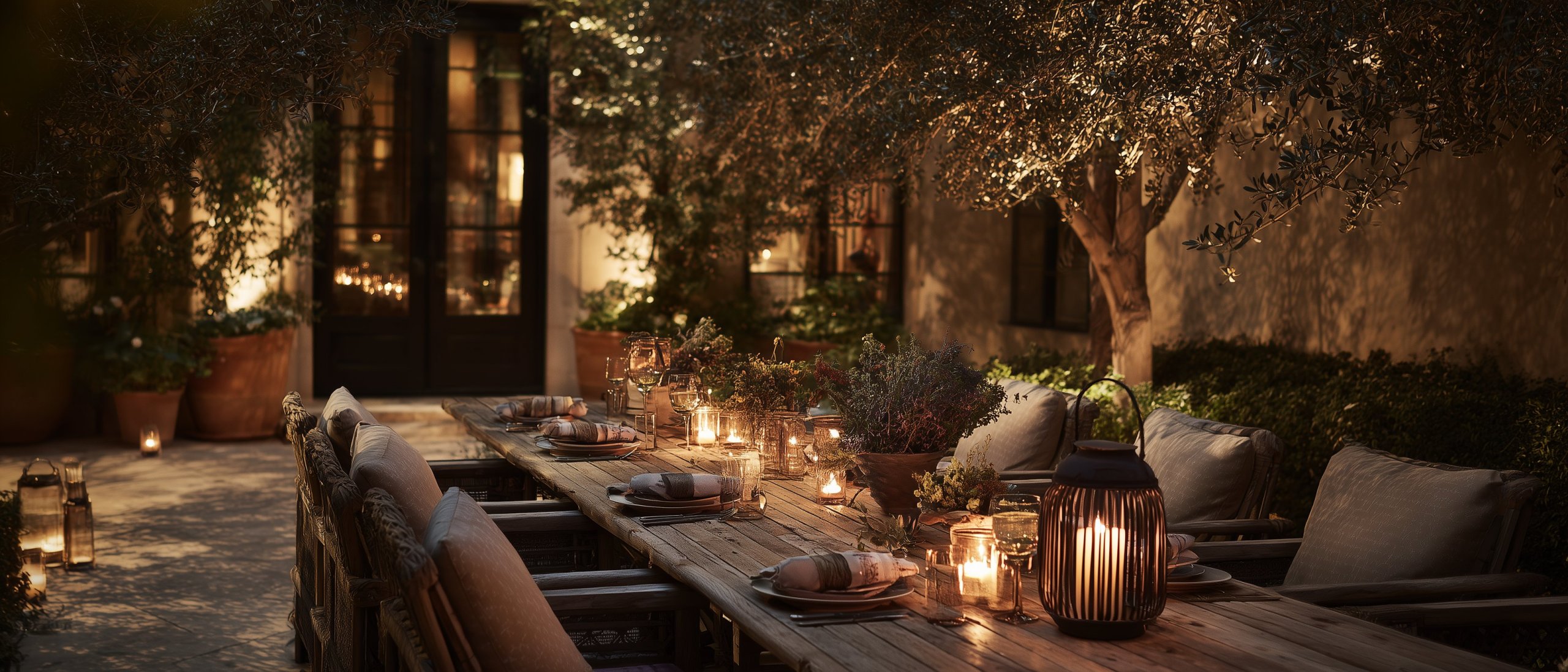
The substantial city clubs, country clubs, and contemporary membership organizations operate at architectural and operational scale that bears engineering treatment as case study. The Pall Mall clubhouse is a building engineered to support multi-century institutional operation; the substantial country club operates infrastructure at residential-tradition scale; the contemporary membership organization is the product of explicit design decisions around contemporary working and social patterns. All bear treatment as engineering and architectural work rather than as social venue.
The conceptual treatment of city, country, and contemporary social clubs — the vetting that gates membership, the operational continuity the membership architecture provides, the working and social infrastructure the family operates within when away from the residence — sits on Social, city & country clubs under the Destination pillar. This showcase treats the documentary parallel: case studies of facility architecture, operational discipline in execution, and the engineering and design decisions the substantial clubs have actually made.
The case studies in this showcase fall into the same three categories the broader Showcase operates by — consenting documentation, anonymous case studies, and engineering documentation of publicly identifiable facilities — across the three institutional sub-categories the membership architecture organizes. The traditional city clubs in the financial capitals, the country clubs in the residential traditions, and the contemporary membership organizations are addressed in turn, with case studies accumulating against each over time.
City clubs in the financial capitals
The substantial city clubs operate as multi-century institutions whose architectural and operational reality bears documentation. The case studies in this category treat specific institutions — the Manhattan clubs (the Knickerbocker, the Brook, the Union, the Metropolitan, the Century Association, the Racquet and Tennis Club) as architectural and operational documentation, the London clubs (White’s, Brooks’s, Boodle’s, the Travellers, the Carlton, the Reform, the Garrick) at the Pall Mall and St. James’s tradition, the Parisian institutions (the Cercle de l’Union Interalliée, the Jockey-Club de Paris, the Travellers), the Hong Kong, Singapore, and broader Asia-Pacific institutions (the Hong Kong Club, the American Club Hong Kong, the Tanglin Club), and the substantial American regional clubs (the Somerset and Algonquin in Boston, the Philadelphia Club and Union League, the Chicago Club and Casino, the Pacific-Union and Bohemian).
The treatment addresses the clubhouse architecture (the engineering and operational reality of the buildings themselves), the operational discipline (staff vetting, member-management discipline, dining and entertaining architecture), and the broader institutional reality that distinguishes the substantial city club from the broader social-club category.
The clubhouses are buildings. The institutions are architectural reality. The showcase treats them as engineering substance rather than as social venue.
Country clubs in the residential traditions
The country club in the residential tradition operates infrastructure at residential-community scale, with engineering and operational architecture that bears documentation as case study. The case studies in this category treat the substantial institutions — the Maidstone Club in the Hamptons, the substantial Newport institutions, the established Westchester and Connecticut clubs, the comparable American and international institutions across the residential traditions — as architectural and operational documentation.
The treatment addresses the facility architecture (the clubhouse, the activity infrastructure, the residential-community integration), the operational disciplines around membership and community engagement, and the broader institutional reality that anchors the country club within the residential tradition it serves. The category overlaps with the activity-club category treated on Activity & recreational clubs showcase where the institution’s golf or tennis programming is its defining activity; the case studies in this showcase treat the institutions whose primary character is social and residential rather than activity-driven.
Contemporary membership organizations
The contemporary membership organizations are the product of explicit design decisions about contemporary working and social patterns, with engineering and operational architecture that bears documentation as case study. The case studies in this category treat specific organizations — the Soho House network’s multi-location architecture and member-experience design, Core Club’s New York-based programming and facility engineering, Casa Cipriani’s maritime-themed institutional design, and the broader contemporary category (the Aviator Club, the Aman New York’s club component, ZZ’s Club, and the broader emerging institutions) — as architectural and operational documentation.
The treatment addresses the facility architecture (often deliberately designed for the contemporary working-and-social pattern), the operational discipline (programming, member-management, the discipline that maintains the institutional character as the network or organization scales), and the broader institutional reality that distinguishes the contemporary category from the traditional clubs treated above.
Anonymous principal engagement
Across all three sub-categories, the showcase includes anonymous case studies that treat the family-side engineering of social-club engagement without identifying family or location. The principal who maintains city-club memberships across the financial capitals the family operates within, with the club relationships engaged as continuous operational infrastructure across the regional rotation. The family whose country-club membership at the residential-tradition institution spans generations and integrates with the broader residential community the family anchors within. The principal whose contemporary-network engagement across the Soho House or comparable network operates as continuous working substrate when away from the residence.
These case studies treat the architectural reality of social-club engagement without surfacing details that would identify the principals — the engineering and operational character of the club relationships is documentable in ways the specific identity is not.
How the Social, city & country clubs showcase fits within Sovereign Showcase
The Social, city & country clubs showcase is the fifth of seven children of Sovereign Showcase. The membership-side split into three (Waypoint, Activity & recreational clubs, Social, city & country clubs) mirrors the Memberships pillar’s structure; the architectural reason is addressed on the Sovereign Showcase hub.
What this showcase distinctively addresses is the engineering, architectural, and operational character of facilities organized around being somewhere — the working and social infrastructure the family operates within when not at the residence. The conceptual treatment of the membership architecture sits on Social, city & country clubs under Memberships; the documentary parallel sits here, with case studies that treat the facilities and the disciplines they operate by at the editorial standard the rest of the site operates by.