The fleet, not the collection
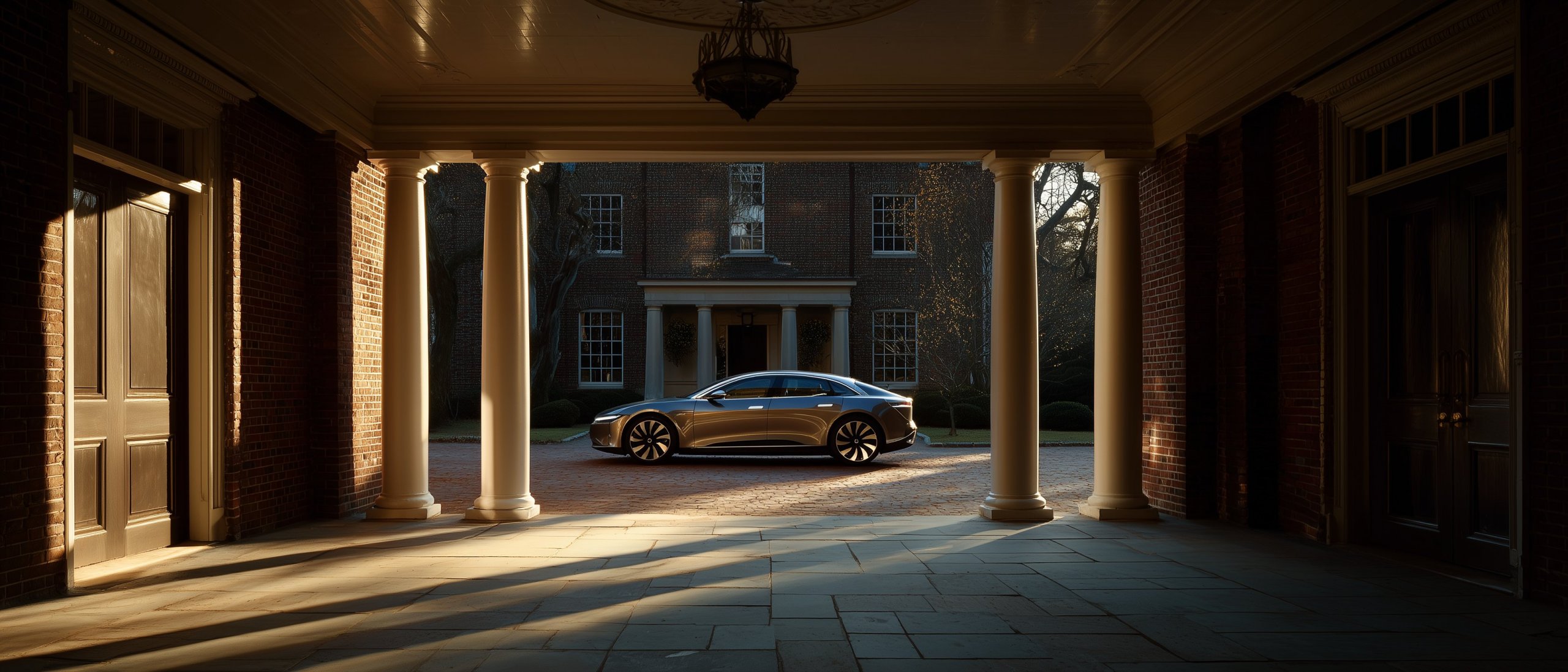
The luxury residence treats its vehicles as a collection — a curated set, each car acquired for its own merits, displayed in the garage, driven on its own occasions. The collection is a legitimate pursuit, and many sovereign estates include one. But the collection is not the operational fleet. The fleet is something else: a coordinated set of vehicles, vessels, aircraft, and recreation craft that serves the family’s movement, the household’s work, and the estate’s daily life. The collection is admired; the fleet is operated. A sovereign estate has both, and the discipline is keeping the distinction clean.
The fleet is the unit of analysis, not the individual vehicle. The household’s movements, the staff’s transportation, the security operation’s vehicles, the recreation craft, the aviation when present, and the marine when present are not separate concerns held together by good staff work. They are one operation, sharing the estate’s charging infrastructure, the operations console, the reasoning layer that coordinates dispatch, and the security operation that runs across all of them.
Electrification as the default
Electrification is the default across categories, and the reason is operational rather than environmental. A vehicle that charges from the estate’s own energy system integrates with its dispatch logic and depends on no outside infrastructure for the basic act of moving. Ground vehicles charge in the garage, vessels at the dock, aircraft at the pad, recreation where it is stored. The fleet whose energy comes from the residence is the fleet whose movements the residence governs — and that property, not the emissions profile, is what the discipline pursues. Internal-combustion vehicles still appear, particularly in collections and in categories where electric alternatives have not yet matured. They are exceptions to a pattern rather than the pattern itself.
Autonomy, arriving unevenly
Autonomy is arriving across the fleet at different paces by category. Ground autonomy is commercially available and rapidly capable, with robotaxi services already operating at scale and consumer driver-assistance moving toward genuine hands-off operation. Aerial autonomy is earlier — the eVTOL platforms reaching commercial service in lead markets are largely piloted, with autonomous variants on the published roadmap. Marine autonomy is earlier still, with assisted-piloting and station-keeping as the current frontier. Each category will reach autonomous operation on its own schedule. The discipline is designing the fleet so that autonomous capability can be added as it matures, without rebuilding the operation around the current state of the technology. Embodied robotic autonomy is the newest of these — humanoid and quadruped platforms arriving in 2026 with built-in language models, voice, and the ability to operate alongside the family in ways the conventional vehicle fleet does not.
Visibility and exclusivity
Mobility is the most visible part of the estate’s life after the property itself. The car in the driveway, the vessel at the dock, the aircraft at the pad are seen by visitors and observers in a way the residence’s internal systems are not. With visibility comes exclusivity, and exclusivity here is largely a function of supply: production limits in the hundreds or low thousands, allocation by invitation, waiting lists measured in years, and the membership relationships — racing clubs, yacht clubs, private airstrips, the elite circuits each category has developed — that the vehicles open and close access to.