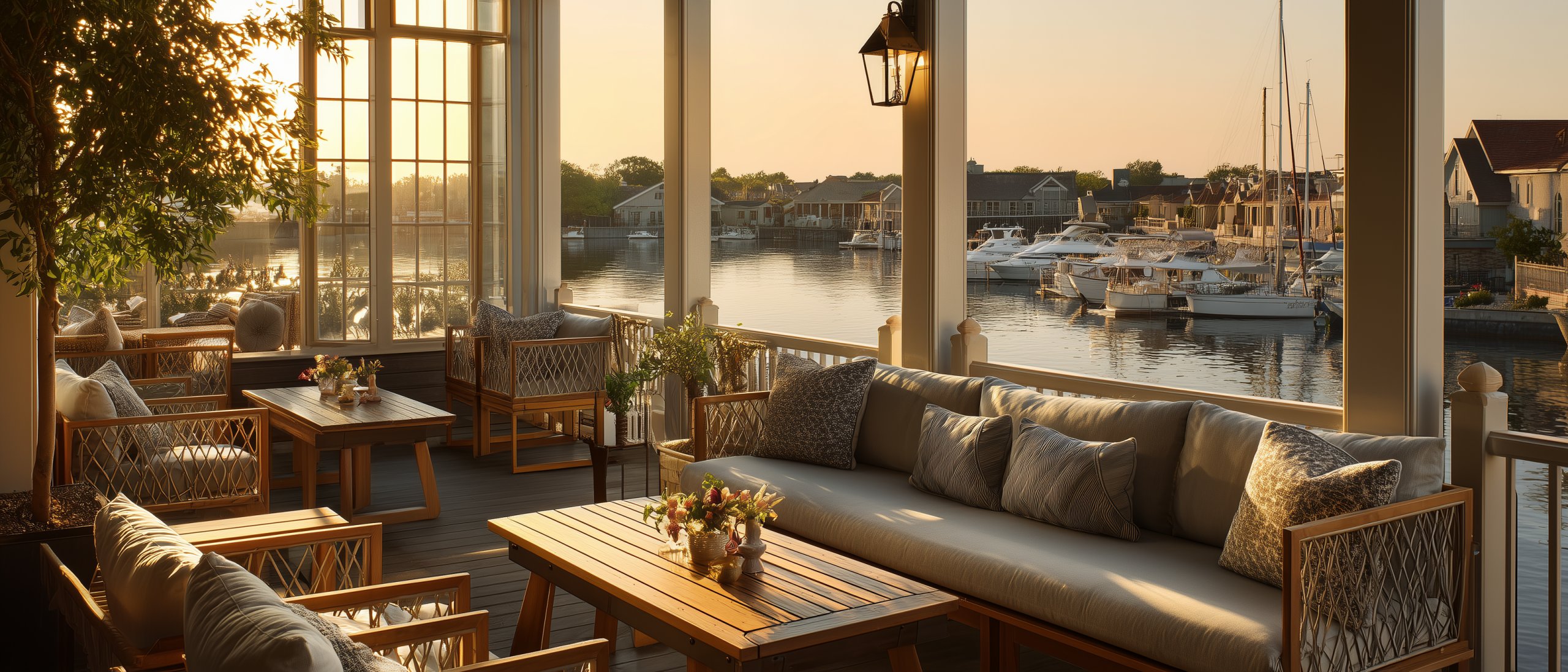
The day boat and the tender are the marine fleet’s daily-use vessels — the platforms the family operates for excursions from the estate’s waterfront, for watersports, for the local water life that occupies substantial portions of the family’s marine time, and for the tender role that supports the larger yachts in the fleet. The category spans roughly 4m to 15m, with the operational range running from beach-launched electric tenders through substantial day boats and picnic-style vessels at the upper end.
Electrification has moved fastest in day boats and tenders because the operational reality of the category fits electric propulsion naturally. The duty cycles are short — most day boats operate for a few hours per outing rather than for multi-day passages — and the range required is bounded by daily-use patterns rather than by cruising endurance. Charging infrastructure at the estate’s dock is straightforward at the scales these vessels operate. The instant torque, the silent operation at low speeds, the absence of fuel handling, and the dramatically lower maintenance overhead are advantages the family experiences daily. The regulatory pressure — the two-stroke ICE bans on freshwater lakes, the restricted-emission zones in major ports — adds enforcement pressure to what is already operationally favorable.
What follows resolves the day-boat-and-tender category across the working sub-types the substantial fleet actually operates within: hydrofoils (the engineering frontier that has reshaped what electric boats can be), substantial electric runabouts (the upper-end displacement of conventional outboard-powered vessels), tenders (the support fleet for the larger yachts), and the broader watersports and excursion categories that occupy the rest of the daily marine fleet.
Hydrofoils — the engineering frontier
Hydrofoils have reshaped the day-boat category by solving the energy-economy problem that constrains conventional planing electric boats. The hydrofoil lifts the hull out of the water at speed, eliminating most hydrodynamic drag and reducing the propulsion power required by an order of magnitude. The result is electric range, speed, and energy economy that displacement and planing electric vessels cannot match.
The substantial commercial hydrofoil builders include Candela (Swedish, the C-8 and the larger C-12 in the category-defining role), Navier (American, the N30 as the apex commercial hydrofoil at substantial-day-boat scale), Mantaray (performance hydrofoil at the smaller end), and Spirit Yachts (British, where the substantial traditional sailing-yacht builder has entered the electric-hydrofoil category). The category is genuinely commercial — substantial production, operational fleets across multiple regions, continuous engineering evolution — and represents the engineering frontier of what electric marine operation can be at the day-boat scale.
Hydrofoils solved the energy-economy problem by lifting the hull out of the water. The result is electric range, speed, and energy economy that displacement and planing electric vessels cannot match.
Electric runabouts and picnic boats
The substantial electric runabout and picnic-boat category has largely displaced conventional outboard-powered vessels at the upper end of the day-boat market. The category includes builders whose product lines are now substantively electric or hybrid: Vita Yachts (the Powerboat range), Hinckley Yachts (the Picnic Boat platform across multiple electric and hybrid configurations), Frauscher (Austrian, the substantial electric runabout category), and Riva at the apex of the traditional-styled day boat now offered in electric configurations.
The treatment addresses the substantive engineering — battery sizing for daily-use patterns, propulsion configuration (single or dual electric motors, drive architecture), charging infrastructure at the estate dock, and the broader operational reality — rather than the styling or the consumer positioning. The architectural observation is that the day-boat category has crossed the electrification threshold where the upper end is substantively electric and the outboard-powered vessel is increasingly the lower-end alternative rather than the default.
Tenders to the larger yachts
The tender is the support vessel for the substantial motor or sailing yacht — the platform that shuttles between the yacht at anchor and the shore, that handles watersports operations off the yacht, that handles guest transport when the yacht is in a remote anchorage without dock access. The substantial yacht typically carries a tender fleet rather than a single tender — a primary tender for guest transport, a watersports tender for towed activities, a beach tender for shore landings, and sometimes a chase boat for the racing-yacht support role.
The tender category has electrified faster than most of the marine fleet because the operational reality (short duty cycles, charging from the yacht’s electrical system) fits electric propulsion well, and because the regulatory pressure to operate without combustion exhaust in confined anchorages and harbor environments is increasing. The substantial tender builders include the apex specialty operators (Pascoe International, Wajer, Castoldi, and the broader category) alongside the day-boat builders that operate at substantial scale across tender configurations.
Watersports, excursion, and specialized vessels
The broader day-boat fleet includes watersports vessels (towed-sports platforms, wakeboard and ski boats), excursion vessels (small fishing boats, sightseeing platforms, the broader category of local-water vessels), and specialized vessels (kayaks, paddleboards, and the non-powered category that often operates from the same waterfront infrastructure).
The category is where the family’s daily water life actually operates — the morning excursion from the dock, the afternoon watersports operation off the family’s primary day-boat platform, the evening run to a waterfront restaurant or social engagement. The vessels are smaller and operate at less engineering depth than the motor yacht or sailing yacht categories, but represent the bulk of the substantial-estate marine activity by use-hours.
The estate-resident reality
Day boats and tenders are the most estate-resident sub-category in the marine fleet. The vessels operate from the estate’s own dock as the home berth, charge from the estate’s marine electrical infrastructure, are maintained through household-managed relationships, and are integrated with the estate’s substrate as part of the family’s daily mobility from the property. Unlike the motor-yacht and sailing-yacht categories where the marina-resident pattern is dominant at the larger scales, the day-boat fleet almost always operates from the estate’s waterfront as its primary base.
The estate’s marine charging infrastructure is sized largely for this category — the daily-charging pattern of the substantial day-boat and tender fleet drives the dock-side electrical service architecture more than the occasional charging of the larger yachts at the same dock. The integration with the estate’s broader energy substrate (the microgrid, the solar production, the battery storage) is the architectural decision that produces operationally clean marine charging across the daily-use fleet.
How day boats & tenders fit within Marine
Day boats & tenders is the third of three sub-categories of Marine, alongside Motor yachts and Sailing yachts. Across the three, day boats and tenders is the category that anchors the estate’s daily water life — the vessels that operate from the estate’s own waterfront, that the family actually uses across most of the days they are present at the property, and that compose the bulk of the marine fleet’s actual use-hours.
The architectural observation is that the category is where electrification has moved fastest and where the daily marine experience the family lives is most directly shaped. The motor yacht in the Mediterranean season and the sailing yacht at the classic-yacht regatta matter at the scale they operate; the day boat at the estate’s dock matters every day the family is at the residence.