The residential climate system maintains the temperature, humidity, and air quality the family expects in every space they occupy. At sovereign-estate scale this is not a single zone with a thermostat. It is multi-zone control with per-area set points, per-space humidity targets where the architecture requires them, the air quality engineering that supports occupant health and the longevity of the art and finishes the residence contains, and the ventilation architecture that introduces fresh outdoor air without compromising the climate the system is engineered to maintain. The system is genuinely substantial — comparable in complexity to a substantial commercial building’s HVAC infrastructure, with the residential refinements that distinguish it from the commercial application.
The structural shift in residential climate over the last decade has been the displacement of combustion-based heating (gas furnaces, oil boilers) by heat pumps. The heat pump moves thermal energy rather than generating it, with substantially higher efficiency than combustion-based heating across most of the climate envelope and the elimination of combustion emissions from the building. Air-source heat pumps (Mitsubishi, Daikin, Carrier at the high end) and ground-source / geothermal heat pumps (WaterFurnace, ClimateMaster) have become the standard for new sovereign-estate construction across most climates. The combustion-based system that defined residential heating for the last century is being phased out, with the all-electric residence becoming the contemporary baseline.
What follows treats the multi-zone HVAC substrate, the smart thermostat and control layer, the specialized spaces with their own climate requirements, the indoor air quality and ventilation architecture, and the relationship to EstateAI. The category is mature on the equipment side; the integration and engineering decisions made during design are what determine whether the residence’s climate system serves the family well across decades or operates as a continuous source of friction.
The substrate
Several engineering layers operate together to produce the residence’s climate.
HVAC zoning. The multi-zone architecture that lets each area of the residence operate at its own temperature and humidity set point. At sovereign-estate scale the zone count is typically fifteen to fifty or more, with variable-refrigerant-flow (VRF) systems from Mitsubishi and Daikin dominating the high end because they support the zone count and per-zone control the residence requires within a single integrated equipment package. Conventional ducted systems with multi-stage zoning equipment serve smaller properties; the VRF architecture is the standard at substantial scale.
Heat pumps and the electrification trajectory. Air-source heat pumps for most climates and geothermal heat pumps for properties with the land and budget to justify the ground loops. The geothermal install carries substantial upfront cost (the well field or horizontal loop, the heat exchangers, the integration with the rest of the mechanical) but produces operating cost and efficiency advantages that compound across decades. For sovereign-estate properties with long expected residence and the land for the ground loops, geothermal is increasingly the specified system; for properties without the land or in retrofit situations, air-source heat pumps deliver most of the efficiency benefit at lower install cost.
Humidity control. The humidity-target dimension of climate, separated from temperature because the comfort and material-preservation requirements differ. Humidification in winter where heating dries the indoor air; dehumidification in summer or in humid climates where cooling alone does not produce the target humidity. The integration with HVAC is engineered at design — the equipment selection, the integration with the air handlers, the per-zone control architecture — rather than retrofitted after the building is occupied.
Indoor air quality and ventilation. The air filtration, the fresh-air ventilation through energy-recovery or heat-recovery ventilators (ERV/HRV), and the engineering that maintains indoor air at substantially better quality than the outdoor air the building draws from. MERV-13 to MERV-16 filtration is the contemporary baseline; HEPA filtration for specific spaces (theaters, art storage, allergy-sensitive members of the household) where the application warrants the substantial cost. IQAir and Aprilaire dominate the upper end of the residential filtration market. The ventilation architecture is engineered around the building envelope: tighter envelopes require more deliberate mechanical ventilation than older, leakier construction did.
Climate is the largest single load the residence’s microgrid serves. The all-electric trajectory reinforces the integration as the residence becomes a single electrical substrate operating against a unified power source.
Specialized spaces
Several spaces in the sovereign-estate residence have climate requirements that diverge from the rest of the household and warrant dedicated engineering.
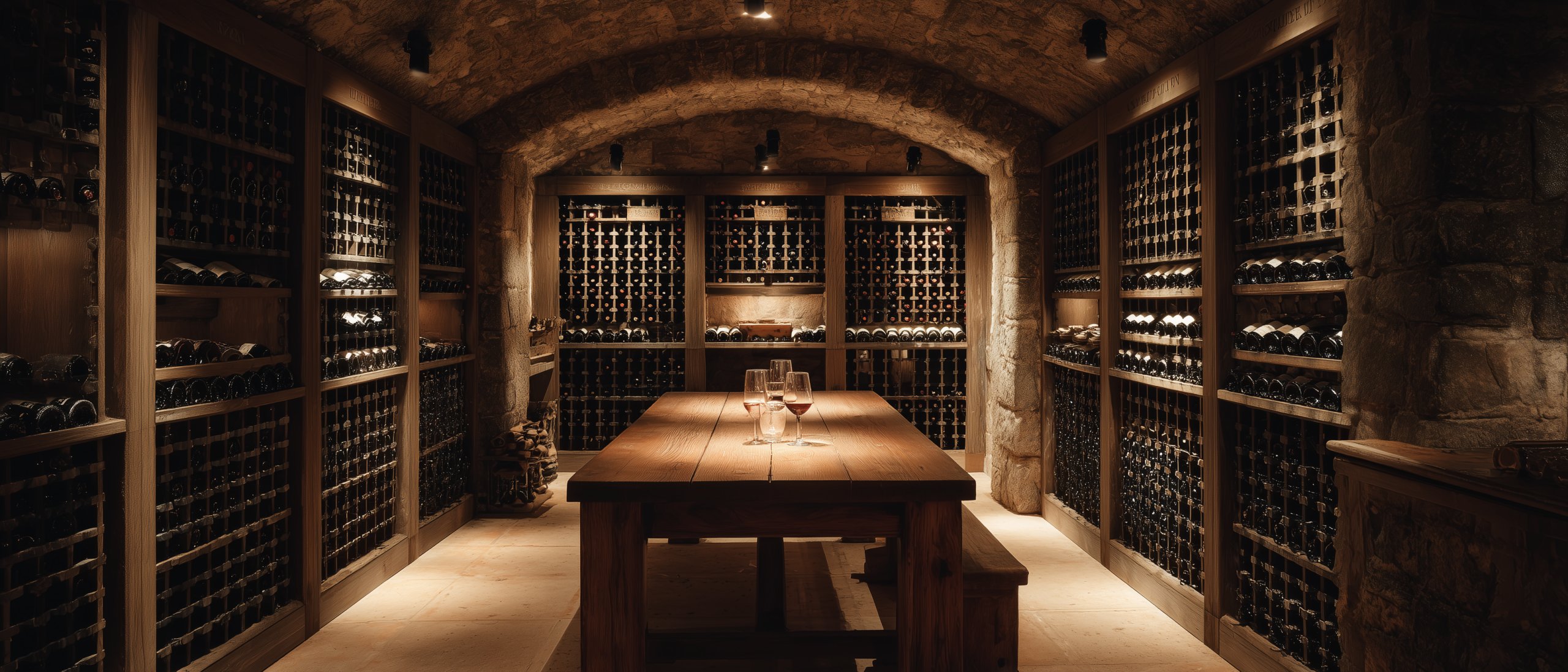
The wine cellar requires sustained low temperature (55-60°F typical) and elevated humidity (60-70% RH) to preserve the wines. The cellar’s climate equipment (WhisperKool, CellarPro, Wine Guardian at the high end) is engineered separately from the residential HVAC, with the equipment sized to the cellar’s volume and the architectural envelope detailed for the climate requirements. The cellar’s integration with the broader monitoring — the operations console reports on temperature and humidity, alerts on excursion — operates through the broader Automation infrastructure.
The working garage often operates at a different climate than the residence — particularly in extreme climates where the garage is uninsulated or where the family stores temperature-sensitive vehicles (collector cars, electric vehicles that benefit from temperature-controlled charging). The garage’s heating, the air-quality management against the dust and emissions, and the integration with the broader climate substrate are engineered alongside the rest of the mechanical.
The art and document storage requires sustained narrow-range climate (typically 65-70°F with 45-55% RH) to preserve the contents. Where the family’s collection is substantial, the storage space’s climate is engineered to museum-grade standards.
The home theater requires the climate engineering that supports occupant comfort across long viewing sessions plus the acoustic isolation that high-end theater requires. The HVAC for the theater is typically dedicated, with the equipment located to minimize acoustic intrusion and the air handlers engineered to deliver the air without producing the airflow noise that compromises the listening environment.
The gym, sauna, spa, and pool environments each have specialized climate requirements that diverge from the residence — high humidity in the sauna and pool spaces, ventilation for the gym, the dehumidification that pool spaces require to prevent moisture damage to the surrounding building.
Relationship to EstateAI
Automation executes; EstateAI reasons. The HVAC controllers manage the equipment against the temperature and humidity set points the schedule specifies. EstateAI optimizes the set points against the household’s actual patterns rather than against the static schedule — anticipating the family’s evening return, pre-conditioning the spaces they are about to occupy, ratcheting back the conditioning in spaces the household is leaving. The automation maintains operational integrity if EstateAI is unavailable; the climate continues to operate against its programmed schedules. What EstateAI adds is the pattern-aware optimization the schedule alone cannot achieve.
How climate fits within Automation
Climate sits as the second of four subsystems treated under Automation — alongside Lighting & shades, Audio-visual, and Mechanical & access. Across the four, climate is the most consequential for the building’s operating cost (the substantial energy consumption the HVAC drives) and for the family’s day-to-day comfort across every hour of every day. The integration with the Energy system is direct — the climate substrate is the largest single load the residence’s microgrid serves — and the all-electric trajectory reinforces the integration as the residence becomes a single electrical substrate operating against a unified power source.
Climate is the substrate that maintains the indoor environment the family lives in across every space the residence contains. At sovereign-estate scale the system is multi-zone, engineered for performance rather than for nominal consumer comfort, increasingly all-electric, and integrated with the specialized spaces — wine, art, garage, theater — that each warrant their own climate engineering. The decisions made during design about zone count, equipment selection (heat pump vs. combustion, VRF vs. ducted), and the specialized-space architecture shape what the residence’s climate substrate is for decades after construction.