The reality
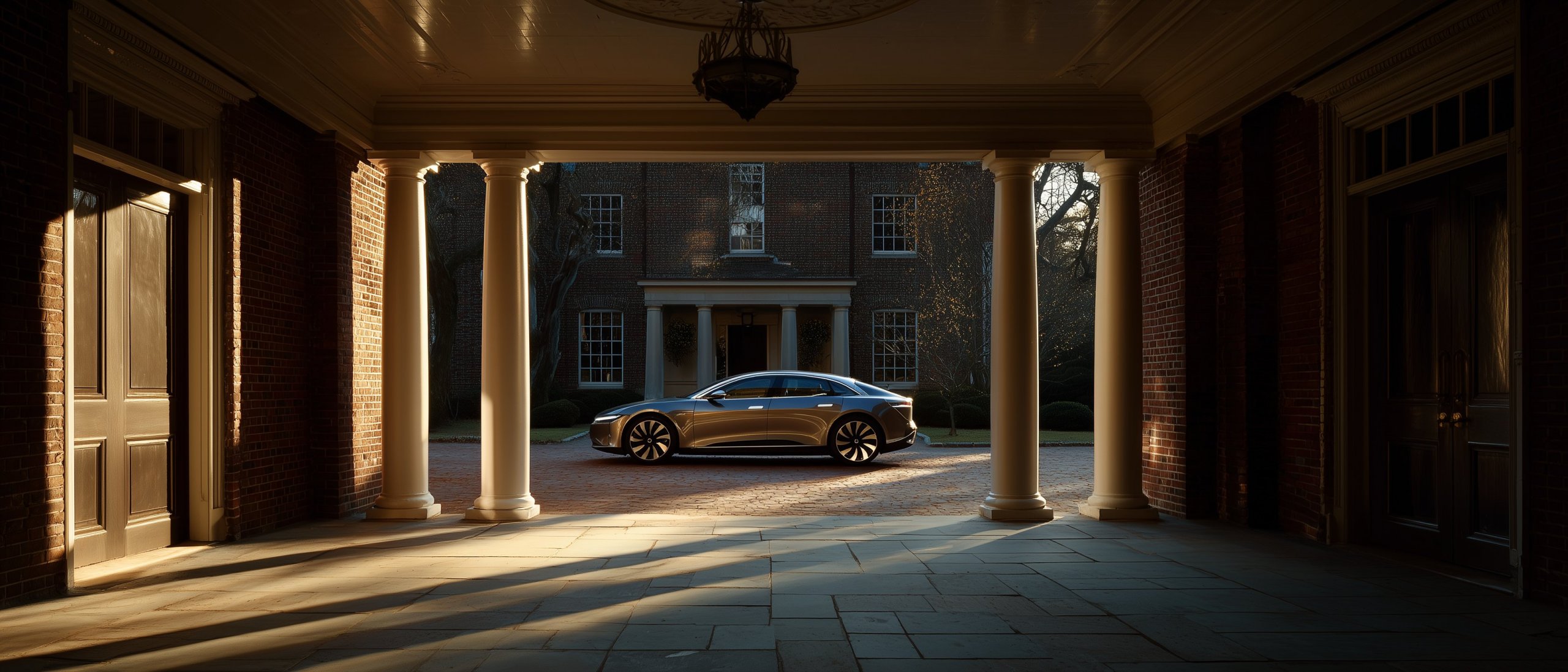
The privately-owned passenger vehicle category is in a hands-off, eyes-on era. The driver does not steer, brake, or accelerate; the driver remains visually attentive and resumes control on demand. This is genuinely useful — the long-haul highway drive becomes a working hour or a reading interval, the dense-traffic commute frees attention, the rush-hour stop-and-go produces no fatigue. It is not, however, the same thing as autonomous driving, and the gap matters.
The earlier expectation was that 2026 would be the year privately-owned Level 4 vehicles reached customers in volume — eyes-off, hands-off, mind-off. That expectation has been adjusted. The Level 3 systems that several luxury manufacturers offered briefly between 2023 and 2025 have been quietly retired, with cost economics and limited operational scope driving the retreat back toward more capable hands-off Level 2++. Privately-owned higher-autonomy capability is beginning to roll out at the end of 2026 with substantial geographic and hardware gating — early consumer-grade eyes-off operation in validated metropolitan areas, on a multi-year path toward broader availability.
The technical truth of which specific platforms achieve which capabilities at which moments is layered with manufacturer marketing that often outpaces operational reality; the platform-by-platform assessment lives elsewhere on the SiliconPlans network. What matters at the sovereign-estate-buyer level is that the practical 2026 state for private vehicles is hands-off, eyes-on across most highway scenarios and increasingly across urban scenarios in mapped environments, with the trajectory toward eyes-off arriving over the years following acquisition.
What capability actually looks like
The operational reality of self-driving cars varies sharply by environment, and the estate’s location matters substantially for how much of the family’s actual driving the autonomous capability handles.
On highways and freeways with clear lane markings and predictable traffic, hands-off systems work reliably across most conditions. The driver remains visually attentive but does not steer; the long-haul highway drive becomes a working hour or a reading interval. On well-mapped urban areas — the cities where robotaxi networks have built detailed maps — capability handles complex intersections, signal-controlled streets, and dense traffic with increasing reliability. On rural roads, on the private access drives that lead to most sovereign estates, on weather-degraded surfaces, and in geographic areas without high-resolution mapping, the autonomous capability degrades and the family is back in supervised assist or driving directly.
The estate in or near a metro area with established mapping (Bay Area, Phoenix, Austin, LA, the broader set of cities the robotaxi networks have validated) gets dramatically more autonomous utility than one in a region the mapping has not reached. The decision to buy now is partly a decision about what the operational design domain will look like across the vehicle’s life, not just where it is today — the cities mapped to robotaxi standards in 2026 will multiply across the decade as the mapping infrastructure extends.
The OTA upgrade trajectory
The vehicle acquired in 2026 is not the vehicle the family will have in 2030. The OTA upgrade trajectory is what makes the category investable today — a vehicle bought now will receive substantial capability additions across its life as the manufacturer’s autonomous-stack roadmap matures. The hardware platform is the fixed commitment; the software is what evolves.
What matters at acquisition is the hardware trajectory. The redundant sensor suite (cameras and radar, increasingly with solid-state LiDAR), the AI compute platform (the latest-generation automotive AI chips that will support what the software delivers in 2028 and 2030), and the OTA-update infrastructure are what determine the vehicle’s capability trajectory across a 10-to-15-year ownership horizon. The discipline is to acquire hardware that will support the capability shipping in 2028 and 2030, not just what the vehicle delivers today. The vehicle whose hardware is already capacity-constrained at purchase is the trade-in in three years; the vehicle whose hardware has headroom is the long-term commitment.
The estate-resident vehicle
The privately-owned self-driving car serves a fundamentally different value proposition than the robotaxi services that often dominate the autonomous-vehicle conversation. The family that owns the vehicle is not summoning it through an app; they are stepping into their own car and instructing it. The car charges from the estate’s charging infrastructure, integrates with the estate’s reasoning layer, holds the household’s preferences (climate setpoints, music libraries, seat positions, route history), and serves the family on the family’s schedule rather than on the platform’s availability.
The integration with EstateAI matters substantively. The principal’s 7:30 AM departure is signaled to the vehicle at 7:00; the climate is conditioned, the cabin lighting matches the morning routine, the destination is loaded, the autonomous capability is enabled for the routes the system handles. The operations console shows the vehicle’s state across the day — home, en route, charging, available. The vehicle is part of the sovereign-estate operation rather than a parallel service the family uses.
The decisions worth surfacing
Four decisions in self-driving car acquisition warrant principal-level engagement.
Hardware trajectory over current capability. The vehicle acquired today is investable for the capability it will deliver in 2030, not the capability it delivers at purchase. The hardware platform — compute, sensors, OTA infrastructure — is the fixed commitment; the software is what evolves. Acquire on the hardware trajectory.
Geographic match. The estate’s location relative to mapped operational design domains determines how much actual autonomous utility the vehicle delivers. A residence in or near a metro with established mapping gets dramatically more value than one in unmapped territory. The honest acquisition decision considers the geographic match against the family’s actual driving patterns.
Vendor longevity. The OTA-update trajectory across 10-to-15 years requires a manufacturer that will exist, will continue to invest in autonomous development, and will support the vehicle’s sensor and compute hardware across its life. The 2026 autonomous-vehicle market includes manufacturers whose 2030 status is uncertain; the discipline at acquisition is to choose vendors with the balance-sheet and roadmap depth to deliver across the ownership horizon.
EstateAI integration. Whether the vehicle is integrated with the estate’s reasoning layer substantively, or treated as a separate vendor-managed system. The integrated approach is what makes the autonomous capability part of the sovereign-estate operation. The integration is set during commissioning of both the vehicle and the broader estate substrate, not retrofitted later.
EstateOps
The self-driving car is operated through the same operations console as the rest of the estate, with EstateAI scheduling against the household’s patterns, security tracking the vehicle in motion, and the digital twin holding the vehicle’s state and autonomous-capability profile across its OTA-evolving life. The vehicle the family acquires in 2026 enters the estate as a hands-off Level 2++ asset on a multi-year capability trajectory; the architecture that allows the vehicle to participate as a substantive system rather than a parallel service is what makes the eventual capability arrival useful to the family’s actual life.