The five sub-classes
The powersports fleet at sovereign-estate level resolves into five working sub-classes, each at a different point in its own technological and operational evolution. Curated profiles of the apex exemplars in each sub-class live on the Showcase hub; the sub-class names below link directly to those collections.
E-bikes. The category that has reshaped what cycling at this level looks like — the luxury automotive houses extending their reach beyond cars (Lamborghini in partnership with 3T, Pininfarina, Porsche via the Greyp acquisition, Bugatti, Ferrari, Aston Martin), the dedicated luxury cycling brands (Specialized S-Works Turbo, Trek Domane+ SLR, BMC Roadmachine AMP, Pinarello), and the performance e-MTB makers (Trek Rail+, Specialized Turbo Levo, Riese & Müller, Stromer) for the trail-active estate. The luxury automotive-branded e-bikes are something specific: not necessarily the most capable bikes technically, but objects whose design language and exclusivity proposition extend their parent brand into a different vehicle type. The category is structurally electric by definition and represents the most decisively electrified of the five sub-classes.
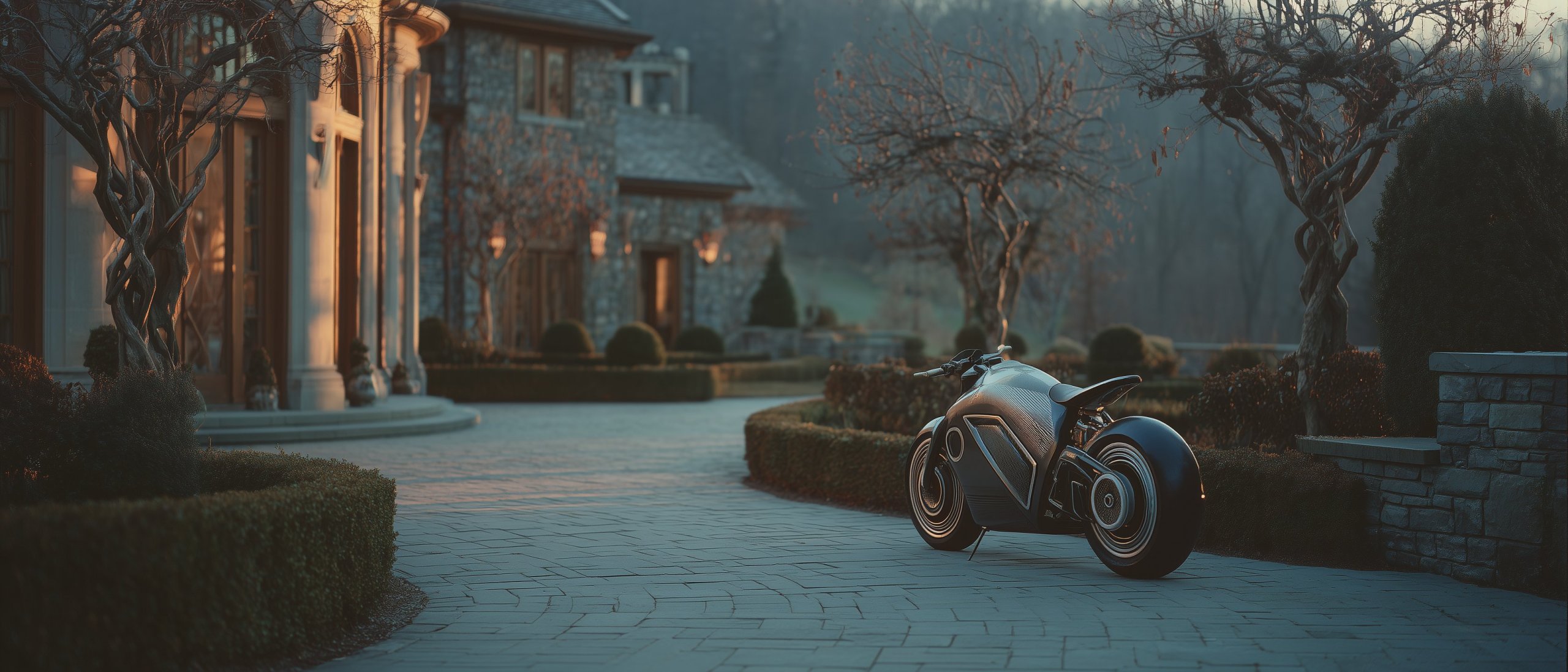
Motorcycles. The category where the electrification transition is most actively contested. The electric segment is real and growing — Harley-Davidson’s LiveWire as the marquee American example, Zero Motorcycles across multiple platforms, the new entrants like Damon HyperSport, Verge TS Ultra, Maeving RM1S, Energica, and Cake offering different performance and aesthetic propositions. But the ICE motorcycle remains structurally dominant in the segments that matter for the sovereign-estate buyer — the Ducati Panigale V4, BMW M 1000 RR, Aprilia RSV4, KTM RC 16, the upper Triumph and MV Agusta lines, and the touring segment dominated by the BMW R 1300 GS, Honda Gold Wing, and Ducati Multistrada V4 Rally. The motorcycle world’s relationship to combustion is structurally different from cars — sound, mechanical character, and rider experience all change when the engine goes electric in ways that meaningfully change what the activity is. For many serious motorcyclists, this is a transition not yet operationally desired even where the technology is capable.
Watercraft. Personal water vehicles distinct from the yachts and tenders treated under Marine. The jetski segment is dominated by Sea-Doo (BRP), Yamaha WaveRunner, and Kawasaki — all internal-combustion — with the electric alternative arriving via Taiga Motors’ Orca and a few emerging entries. The electric foil-board segment (Fliteboard, Lift Foils, Awake, Manta5) is rapidly displacing traditional wakeboarding and water-skiing for many families; the hydrofoil experience is quieter, lower-impact, and more skill-progressive than wakeboarding behind a tow boat. Electric surfboards (Awake RÄVIK, Radinn) and personal electric watercraft round out the segment. The category overlaps with Marine’s day boats and tenders at the boundary, but the operational distinction is the recreational-vehicle character — these are ridden actively for the activity, not for transportation between places.
Snow vehicles. The category most directly tied to specific estate geography — meaningful at mountain estates and winter properties with serious snowfall, irrelevant at properties without. Where snowmobiles are part of the fleet, the dominant builders are Ski-Doo (BRP), Polaris, Arctic Cat (Textron), and Lynx (BRP’s European-focused brand), all internal-combustion. Taiga Motors of Canada has established the electric snowmobile category with the Nomad and Atlas, with the operational advantage that electric snowmobiles run silently through environments where the noise of combustion is intrusive: residential ski areas, sensitive wildlife terrain, the early-morning ride from the property before guests are awake. The electric snowmobile is arriving as a viable alternative for recreation and light-trail use; serious off-trail and back-country use remains the territory of the high-performance ICE platforms.
All-terrain vehicles. The most operationally cross-cutting category — ATVs and side-by-sides are simultaneously recreation vehicles, working vehicles for property maintenance, and the practical answer to moving across acreage that other vehicles cannot reach. Polaris RZR and Ranger, Can-Am Maverick and Defender, Yamaha Wolverine, and the Kawasaki Mule line dominate the conventional segment. The electric crossover is gaining real traction because the working-use case suits electric well: Polaris Ranger XP Kinetic, Volcon Stag and Grunt, the Bobcat utility electric line. For the estate that uses ATVs primarily for grounds work, the electric alternative is increasingly practical; for the family whose ATV use is heavily recreational and off-trail, the ICE platforms remain dominant.
What unifies the category above is operational character rather than mechanical similarity. These are vehicles the family rides for the experience — the morning e-bike on the estate’s trails, the afternoon jetski run along the shore, the snowmobile weekend at the mountain property, the trail ride through the back acreage. The car carries the family between places; the yacht hosts the family at sea; the aircraft takes the family across distance. The vehicles here exist because riding them is the point. The destination is incidental, often nonexistent, and the activity itself is what was acquired.
This makes powersports and recreation the most personally expressive category of the estate’s mobility. A family’s car selections reflect taste and use; their aircraft and yacht selections reflect investment and pursuit; their powersports selections reflect what they actually do with their leisure. A serious motorcycle in the garage tells the visitor something specific about the principal. A fleet of e-bikes tells something else. A working snowmobile fleet at the mountain property tells a third thing.
The propulsion transition
What is consistent across the Mobility pillar is electrification as the default; what differs in this category is how far the transition has progressed in each sub-class. E-bikes are entirely electric by definition. The electric watercraft and foil boards are operationally established at the upper end. Electric ATVs and snowmobiles are arriving for the right use cases. Electric motorcycles are growing but face the longest path to dominance because the rider experience changes most consequentially when the engine does.
The practical consequence is that the powersports fleet contains both electric and combustion-engine vehicles, and will for years to come. The garage or storage area handling the fleet has to accommodate both — charging infrastructure for the electric segment, fuel storage and ventilation for the combustion segment. The architectural decision is not whether to choose one or the other but how to host both reliably.
The racing dimension
Each sub-category carries its own racing world running alongside the recreational use, with the depth varying substantially across them.
Motorcycles have the most developed racing culture. MotoGP-adjacent track days at private circuits, vintage motorcycle racing at Goodwood’s Festival of Speed and Revival, the Isle of Man TT for the few who pursue it, the Bonneville salt-flat record-setting tradition, the various national and regional racing series. For the principal who rides seriously, the motorcycle is often acquired partly for the racing relationship it enables. The track-day economy at the high end — the BMW M Motorsport Driving Academy, the Yamaha Champions Riding School, the various manufacturer race-school programs — is substantial.
The other sub-categories have racing worlds at smaller scales. Watercraft has the Pro Watercross and IJSBA jetski circuits, the SUP racing scene, and the emerging electric foil-board racing as equipment matures. Snow vehicles include X Games snowmobile events, the snocross national circuit, and snowmobile hillclimb championships for families based at winter properties. All-terrain vehicles have AMA ATV motocross, side-by-side desert racing, and the Baja 1000-style endurance events that side-by-sides have transformed in recent years. E-bike racing is still emerging — UCI e-MTB World Championships, e-bike gravel events, and growing road-bike e-bike racing — but remains less developed than the others.
The broader treatment of the racing pursuit and the clubs, circuits, and social architecture it operates within lives on the Destination pillar, where the powersports racing world joins the car-racing and yacht-racing worlds as part of the broader competitive-leisure ecosystem.
A family’s powersports selections reflect what they actually do with their leisure. The vehicles in this category are diagnostic in a way the rest of the fleet is not.
Storage, infrastructure, and the estate’s accommodation
Powersports vehicles place specific demands on the estate’s infrastructure that are easy to underestimate at design time and expensive to retrofit later.
Storage volume. A serious powersports fleet occupies more space than the family expects. A working snowmobile fleet (typically four to eight vehicles for a property that actually uses them) requires substantial enclosed storage. A motorcycle collection of six to twelve bikes wants its own dedicated area separate from the main garage. ATVs and side-by-sides are physically large — a side-by-side is roughly the footprint of a small car — and a fleet of them needs commensurate space. The cumulative storage requirement for a full powersports fleet at a substantial estate can equal or exceed the main garage’s footprint.
Climate and protection. Most powersports vehicles benefit from climate-controlled storage; motorcycles particularly so, since their electronics and seals age poorly in temperature and humidity extremes. Snowmobiles are typically stored in conditions that prevent fuel degradation and corrosion across the summer off-season; their winter storage is the operating season. The storage architecture differs from the main garage because the use patterns differ — powersports vehicles are often pulled out for specific outings rather than driven daily.
Charging and fuel infrastructure. The electric segment of the fleet charges from the estate’s charging infrastructure, with multiple lower-power connectors (Level 1 or low Level 2) dedicated to the bikes, watercraft chargers at the dock, ATV chargers at the equipment area. The combustion segment requires fuel storage, with the regulatory and safety considerations that fuel storage carries. The storage area’s ventilation has to handle both possibilities.
Trailers and transport. Many powersports vehicles travel to their destinations — motorcycles to track days, snowmobiles to the back-country trailhead, ATVs to off-road events, watercraft to lakes other than the estate’s own. The estate’s vehicle storage typically includes accommodation for the trailers and transport vehicles that move the powersports fleet to its destinations. This is rarely planned at design time and frequently consumes space the architect did not anticipate.
Working area. Powersports vehicles need maintenance — tire changes, oil changes for the combustion segment, battery service for the electric, the routine work that keeps the fleet operational. A dedicated work area (lifts, benches, tool storage) is part of any serious powersports installation. For some families this overlaps with the car working garage; for others the powersports work area is separate because the vehicles and the tools differ enough that combining them is impractical.
The architectural decisions that matter
The use program. What the family actually does, expressed specifically. “A few motorcycles” is not a use program; “the principal rides Ducati on track days six times per year, the spouse rides a touring BMW for weekend trips, and the children each have one of the smaller bikes” is. The specific use shapes the storage, the charging, the working area, and the trailer accommodation. The discipline is to articulate the actual program at design time rather than estimating from a generic “powersports interest” baseline.
The geography-driven categories. Snowmobile infrastructure is meaningful only at properties with the snowfall and the trail access that support it. Watercraft infrastructure at scale matters only at properties with the waterfront to support active use. ATV infrastructure matters most at properties with substantial acreage and trail networks. The geography drives which sub-categories the estate genuinely supports at scale; trying to support all five at properties that geographically lend themselves to only some produces underused infrastructure.
The growing electric segment. Each sub-category is electrifying at its own pace, and the electrical infrastructure for the powersports area should be sized for the projected electric share of the fleet rather than the current share. Estates building now are reserving capacity for an electric segment that will be substantially larger across the next decade than it is today.
The racing-pursuit accommodation. For families whose principal pursues powersports racing seriously, the estate’s infrastructure may need to accommodate race-prep, instructor relationships, and the travel patterns that competitive use produces. This is closer to the working-garage discipline (addressed under cars and working and pursuit loads) than to the storage-and-maintenance baseline.